Home / Guides
Types of coffee makers explained, with the one question that picks yours
Updated by Isadora Venn. Links to Amazon earn us a commission (how that works).
There are eight common types of coffee makers in American kitchens, and most people only need to choose between two of them. This guide to coffee makers explains each type in a paragraph, then shows which one matches how you drink.
Quick picks
One example from three different types.
OXO Brew 8-Cup
See OXO Brew 8-Cup on Amazon Amazon listing
Ninja DualBrew GP161
See Ninja DualBrew GP161 on Amazon Amazon listing
Chemex Classic 8-Cup
See Chemex Classic 8-Cup on Amazon Amazon listing
Short answer
What are the different types of coffee makers? There are eight: automatic drip, grind and brew, single-serve pod, pod plus carafe, pour-over (manual or automatic), French press, cold brew makers and espresso machines. For more than one mug a day, automatic drip is still the best value, and nothing else on that list comes close once you price a year of coffee.
The quickest way to choose: count how many mugs leave your kitchen each morning. One mug? Then a pod machine or a pour-over cone makes sense. Two or more, and you want a carafe.
The types
Automatic drip
Heats water and showers it over grounds in a basket; coffee drips into a glass or thermal carafe. Makes 4 to 12 maker cups at once. The default for families and offices.
Grind and brew
A drip machine with a built-in grinder. Fresher flavor from whole beans, more cleaning, louder mornings. See coffee makers with grinders.
Single-serve pod
Pierces a sealed pod and pushes hot water through it. Fast and tidy, and the most expensive way to make a cup.
Pod plus carafe
One machine with two sides: pods for one person, a drip carafe for everyone else. The Ninja DualBrew and Keurig K-Duo live here.
Manual pour-over
A cone or flask (Chemex, V60) plus a kettle. You control everything and need a few minutes of attention. No plastic required.
Automatic pour-over
A machine that mimics pour-over pouring patterns: Ratio, Chemex Ottomatic, Fellow Aiden's bloom programs. Pricier, often prettier.
French press
Coarse grounds steep in hot water, then a metal filter presses down. Heavier body, some sediment, no electricity needed.
Espresso
Pressure pushes water through finely ground coffee in seconds. A separate hobby with its own gear; not covered on this site.
Cold brew makers soak grounds in cold water for many hours (usually overnight). The result is smoother and less acidic than hot coffee poured over ice, which is why cold brew has its own shelf of jars and pitchers at every kitchen store. Several drip machines now include a fast cold brew mode, including the Ninja DualBrew and Breville Luxe, so a separate cold brew jar is less necessary than it was.
Picking a type
Use this coffee makers buying guide in order. Stop at the first line that fits.
- Someone in the house refuses to give up pods? Pod plus carafe.
- Only one mug a day, and you like a ritual? Manual pour-over.
- Only one mug a day, and you don't? A drip brewer with a single-serve basket, like the OXO 8-Cup.
- Want fresh-ground coffee but have no room for a grinder? Grind and brew.
- Worried about plastic? Pour-over, or a Ratio.
- Everyone else: automatic drip.
These are the coffee makers essentials, and if you only read one part of this guide to coffee makers, read this list, because the type decides your yearly coffee bill and your morning routine long before any brand name does. Features such as Wi-Fi and iced modes come after the type is settled. A surprising number of people end up paying for a strength button they press twice and forget.
One example of each
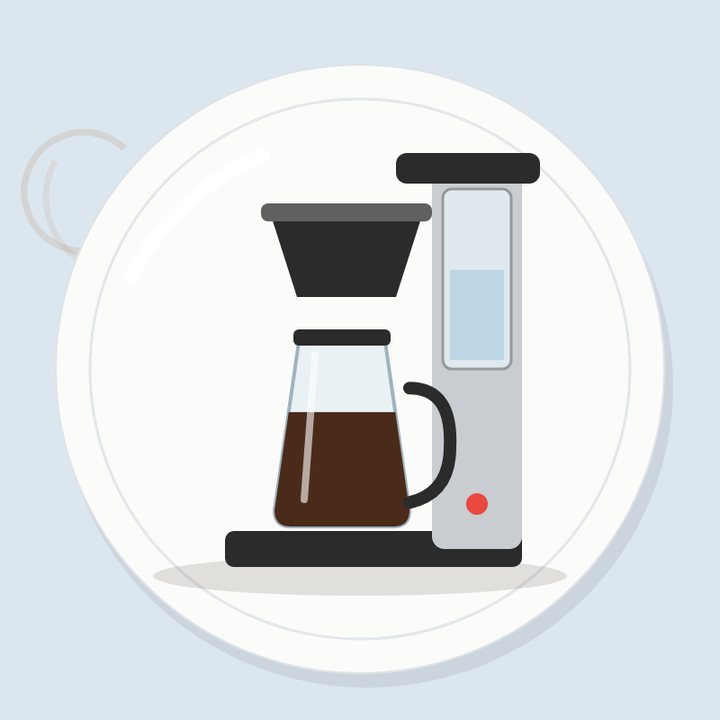
Moccamaster KBGV Select
Automatic drip, the certified classic.
See Moccamaster KBGV Select on Amazon ReviewAmazon listing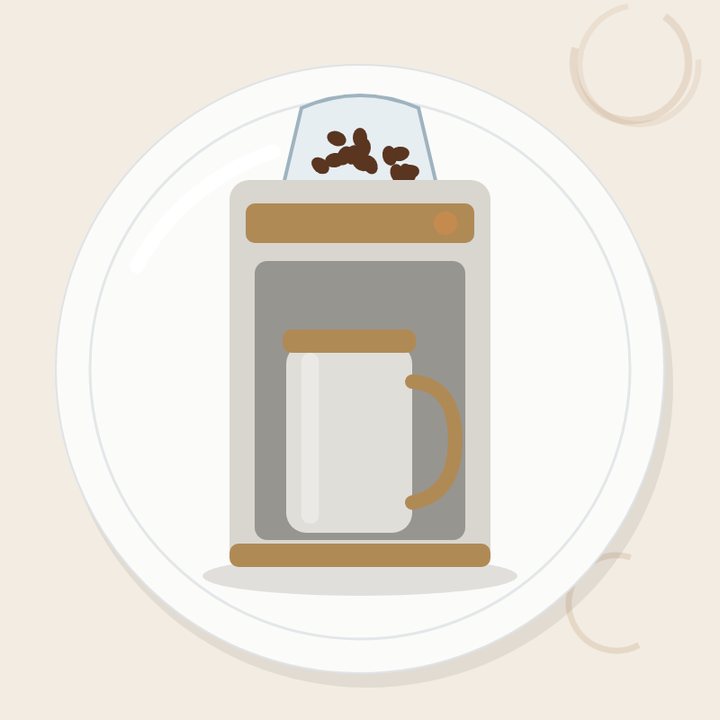
Café Specialty Grind and Brew
Grind and brew with SCA certification.
See Café Specialty Grind and Brew on Amazon ReviewAmazon listing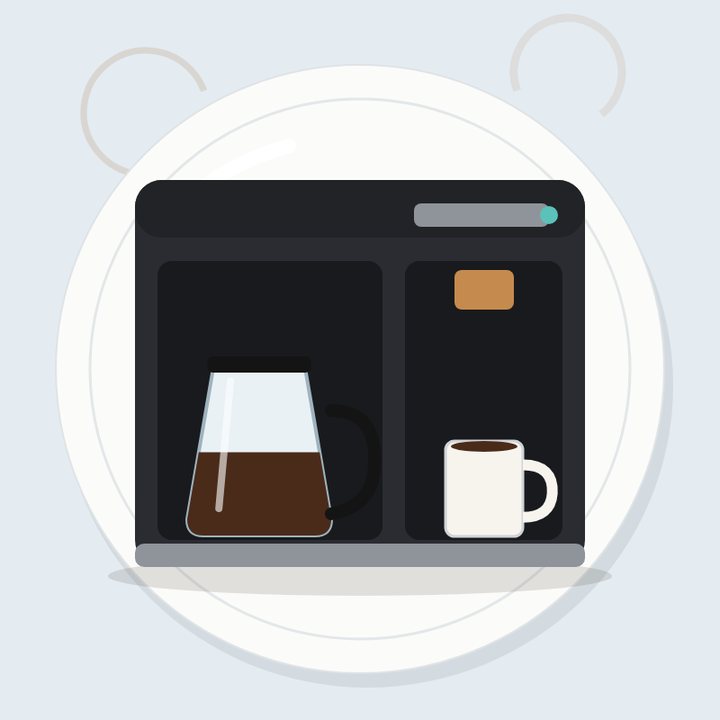
Keurig K-Duo Hot & Iced
Pod plus carafe from one 72 oz tank.
See Keurig K-Duo Hot & Iced on AmazonAmazon listing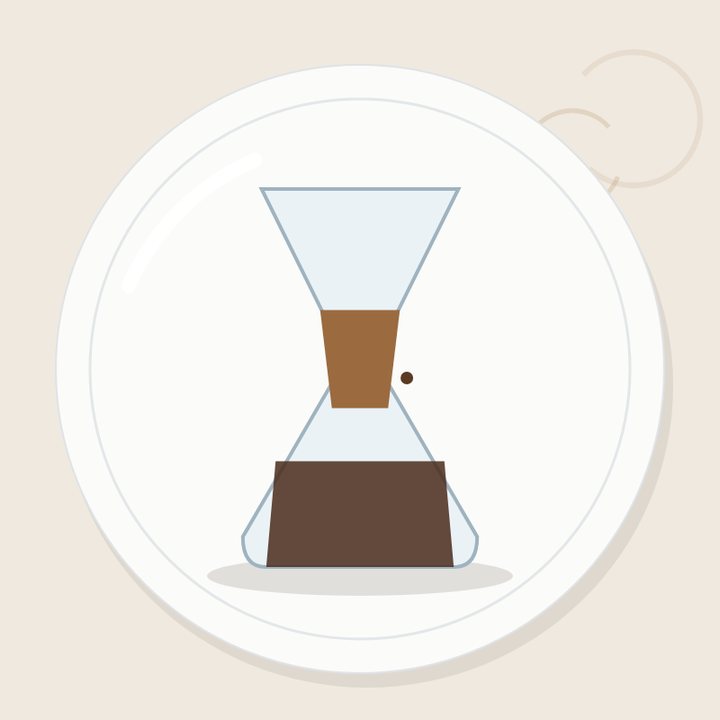
Chemex Classic 8-Cup
Manual pour-over in borosilicate glass.
See Chemex Classic 8-Cup on AmazonAmazon listing
Ratio Six Series 2
Automatic pour-over style with glass water lines.
See Ratio Six Series 2 on Amazon ReviewAmazon listing
Fellow Aiden
Programmable drip with bloom presets and an app.
See Fellow Aiden on Amazon ReviewAmazon listingQuestions by type
Can it make just one cup?
Pods handle one cup, and so do pour-over cones and single-serve baskets. Big drip machines usually don't, unless they have a small-batch mode.
Ninja CE251: small-batch setting for 1 to 4 cups. Fellow Aiden: 1 to 10 cups (Amazon listings).
Pods or beans: what does a cup really cost?
Pod machines cost the most per cup by a wide margin. The type you pick sets your coffee bill for years.
At this site's defaults, a 10 oz mug costs about $0.30 from beans and $0.48 from a pod (Brew Clock math).
Does hot water touch plastic?
Manual pour-over is the type with the least plastic, followed by the few automatic machines that publish their materials.
Chemex: non-porous borosilicate glass. Ratio Six: glass water lines and stainless steel after a Tritan tank (Amazon listing, Ratio Coffee).
Matching type to kitchen
Small apartments do best with a slim drip brewer or a pour-over cone, because counter space runs out before budget does. Family kitchens want a 10 to 12-cup drip machine with a thermal carafe. Offices want the biggest tank they can find. And mixed households, where one person lives on pods, are the only place a pod-plus-carafe machine clearly earns its extra height.
Types compared
| Model | Type | Capacity | SCA certified | Carafe | Grinder | Water path (maker) | Height | Warranty | Full pot time | Buy |
|---|---|---|---|---|---|---|---|---|---|---|
| Moccamaster KBGV Select | Drip | 10 cups, 40 oz (4 oz per cup) | Certified 2026 | Glass on a hot plate, shuts off after 100 min | None | Not listed | Not listed | 5 years | 40 oz pot in 4 to 6 min | Buy |
| Café Specialty Grind and Brew | Grind and brew | 10 cups; 75 oz tank | Certified 2023 | Double-wall vacuum thermal, about 2 hr | Burr, 6 settings | Carbon water filter | Not listed | Not listed | Not listed | Buy |
| Ninja DualBrew GP161 | Pods plus carafe | 12-cup glass carafe; pods 6 to 12 oz | Not on the list | Glass on an adjustable plate, up to 4 hr | None | 60 oz removable reservoir | 15.47 in (10.09 x 10.67 in footprint) | Not listed | Cold brew carafe under 20 min | Buy |
| Ratio Six Series 2 | Drip | 8 cups; about 40 oz from 44 oz of water | Not on the current list | Double-wall stainless thermal, no hot plate | None | Stainless, borosilicate glass, aluminum, silicone; Tritan tank | 15 in (7 x 12.5 in footprint) | 5 years | Not listed | Buy |
| Chemex Classic 8-Cup | Pour-over | 8 cups | Manual brewer (not tested) | Borosilicate glass, no plate | None | Borosilicate glass | Not listed | Not listed | Not listed | Buy |
The same table works as a rough guide to coffee makers in general: drip and grind-and-brew lead on capacity, pour-over on materials, pod machines on speed for one.
Types FAQ
What are the different types of coffee makers?
Eight, each described in the types section above.
Which type of coffee maker makes the best coffee?
For brewed coffee, a drip machine on the SCA certified list or a careful manual pour-over. Both control temperature and time well.
Which type of coffee maker is cheapest to run?
Drip or French press with whole beans. Pods cost the most per cup.
What type of coffee maker is best for one person?
A pour-over cone works, and so does a drip brewer with a single-serve basket.
Is pour-over better than drip?
Not automatically. Pour-over gives you control; a certified drip brewer gives you consistency without effort.
Do I need an espresso machine for lattes?
Not necessarily. Strong drip coffee plus frothed milk gets you close for much less money.